|
 |
| Responding to Substation Incidents |
|
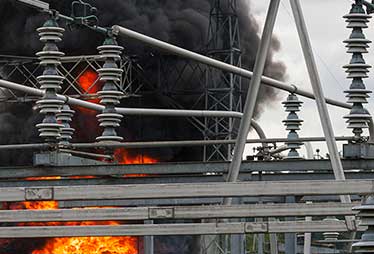
| Utility substations are secured facilities containing transformers and other high-voltage equipment that poses significant electrical shock hazards and other risks to first responders. The chemicals present in substation equipment —such as transformer oils and sulfuric acid—make fires in these facilities especially dangerous. |
| To order your FREE safety training booklets, visit the Duke Energy first responder safety website. |
|
|
|
|
| Do Not Enter! |
| If you arrive at a substation incident before Duke Energy, contact us and remain outside all locked doors, gates and fenced areas. Under no circumstances should you enter the substation before Duke Energy personnel arrive. While you wait for our personnel, take these precautions: |
| • |
If equipment is burning, let it burn. Burning electrical equipment is already ruined and will be replaced. Do not risk injury to protect equipment that will not be repaired. |
|
| |
◦ |
Use a 30-degree fog spray at 100 psi to protect exposures and prevent fire from spreading. Do NOT direct water into the substation. |
|
| |
◦ |
Be alert for overhead power lines. Use nonconductive ladders and tools, carry them parallel to the ground, and keep them below shoulder level to avoid contact with overhead facilities. |
|
|
| • |
Isolate the area at least 300 feet in all directions. Keep unauthorized persons away. |
|
| • |
Be alert for transformer explosions, smoke hazards and oil releases. Stay upwind and consider initial downwind evacuation for at least 1,000 feet. |
| • |
Monitor for oil runoff; direct it away from catch basins or surface waters. |
|
|
| Respond Conservatively to Substation Fires |
| Resist the natural impulse toward aggressive action. Enter a substation ONLY if specifically directed to do so by your incident commander and AFTER Duke Energy confirms that equipment has been de-energized. |
With equipment de-energized, a transformer oil fire can be extinguished by using protein foam and water fog sprays. Never use a solid stream of water on oil, as it can spread the fire. If fluorinated fire suppression foams are used in a fire emergency on Duke Energy equipment or property, please provide the site/contact with the SDS and label information for review to determine possible reporting requirements and cleanup standards. If your department uses fluorinated fire suppression foam, we encourage you to transition to Fluorine-Free Foam (FFF) alternatives. |
Report all oil releases to the incident commander and Duke Energy. Follow standard tactics for a hazardous materials response. |
| Would You Like to Know More? |
| Additional utility safety tips, case studies, instructional videos and training tools can all be found, at no charge to you, on Duke Energy's first responder safety website. |
|